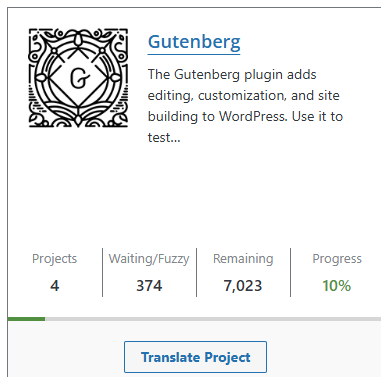
Progress Within the Gutenberg Project
After understanding how the WordPress translation platform works and reviewing the glossary guidelines for the Spanish (Costa Rica) (es_CR) locale, I continued working within the Gutenberg project, submitting new translation proposals and strengthening my participation within the WordPress Polyglots team.
During this stage, the translation process became clearer. Once I became familiar with the translate.wordpress.org interface and the rules of the local glossary, it became easier to identify which strings could be translated with confidence and which required further context analysis.
Within the Gutenberg project, I continued submitting translation proposals mainly related to editor interface elements, display options, and system messages. This process allowed me to consolidate the knowledge gained in the previous stages and steadily increase the number of strings associated with my participation on the platform.
According to the record shown by the platform, the Gutenberg project reflects 69 strings linked to my translation activity, which represents significant progress within the academic contribution exercise carried out for this project.
Evidence of Progress in Gutenberg
The following screenshots provide evidence of the progress achieved within the Gutenberg project. They show some of the strings that were worked on, the environment used to submit translation proposals, and the accumulated progress recorded during the contribution process.


This progress made it possible to verify that contributing to open-source projects involves not only understanding the tools used, but also developing the judgment needed to interpret the context of text strings and correctly apply the language rules defined by the translation community.
One of the most important lessons from this stage was understanding that translating software does not consist only of translating words, but of correctly interpreting the context in which those words are used within the system.
Leave a Reply